
26th January 2026
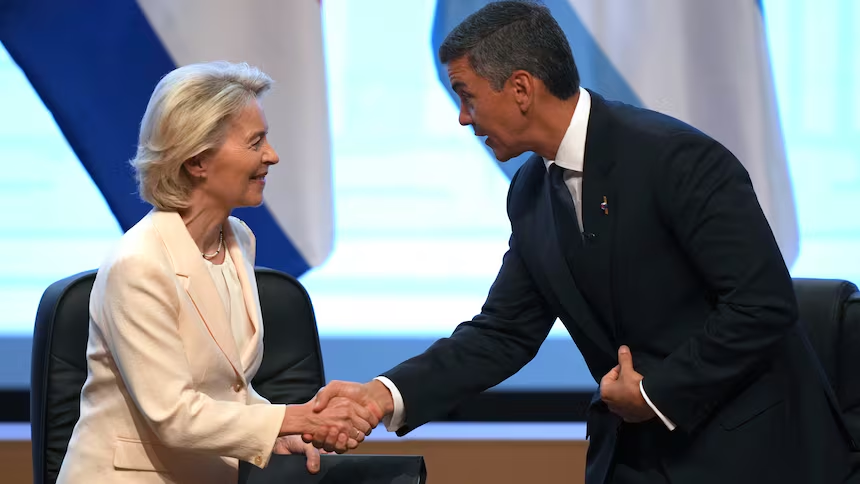
After more than 25 years of negotiations, the European Union and the Mercosur bloc of South American countries have formally signed a landmark free trade agreement, marking a major step toward deeper economic integration between the two regions. The agreement, signed in Asunción, Paraguay, still requires ratification by the European Parliament before it can take effect.
The deal is widely viewed as a geopolitical win for the EU at a time of heightened global trade tensions, rising protectionism, U.S. tariffs, and expanding Chinese influence. By strengthening ties with a resource-rich and strategically important region, the EU reinforces its global trade footprint and signals continued commitment to multilateralism and free trade.
European Commission President Ursula von der Leyen emphasized the agreement’s geopolitical and economic significance, framing it as a deliberate choice of cooperation and long-term partnership over isolationism. The agreement also underscores South America’s intent to maintain diversified trade and diplomatic relations despite shifting power dynamics in the Western Hemisphere.
Despite the breakthrough, the agreement remains politically sensitive. Strong opposition persists, particularly from European agricultural groups concerned about competition from South American imports. While countries such as Italy have softened their stance following the introduction of quotas, safeguards, and EU subsidies, France continues to oppose the deal, posing a risk to ratification.
The agreement creates one of the world’s largest free trade zones, covering over 700 million consumers and around a quarter of global GDP, while eliminating more than 90% of tariffs between the EU and Mercosur. It expands market access for European industrial exports such as cars and machinery, improves competitiveness and trade flows, and offers new agricultural opportunities for South American producers within controlled quotas and safeguards. Strategically, it strengthens the EU’s geopolitical influence in South America, supports rules-based global trade, reduces uncertainty for investors, and promotes long-term economic cooperation and stability between both regions.