
11th May 2026
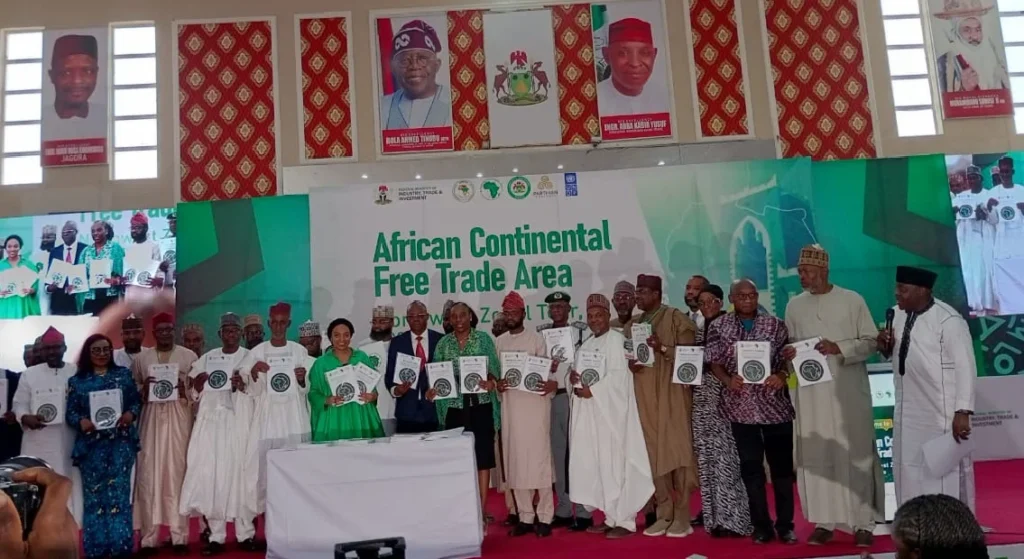
The Federal Government of Nigeria has introduced simplified trade guidebooks and practical toolkits to support greater private sector participation in the African Continental Free Trade Area, as part of ongoing efforts to boost intra-African commerce.
The initiative was launched in Kano during a North-West regional engagement led by the Minister of Industry, Trade and Investment, Jumoke Oduwole. The programme forms part of broader consultations involving the Public-Private-Press (P3) framework on AfCFTA implementation.
The newly developed materials, produced in English, Hausa, and Arabic, are designed to help businesses better understand key trade requirements such as rules of origin, customs procedures, standards compliance, and market entry processes. The tools are particularly targeted at small and medium-sized enterprises as well as informal traders seeking to expand across African markets.
According to the Minister, the initiative aligns with the government’s economic agenda aimed at promoting inclusive growth and reducing barriers that limit participation in cross-border trade. She noted that many businesses continue to face challenges in navigating export processes, and the new resources are intended to provide clearer and more practical guidance.
As part of the rollout, regulatory agencies will remain in Kano to offer direct support services, including business registration, product certification, and issuance of certificates of origin. Additional capacity-building activities such as export simulations and technical training sessions are also planned to enhance readiness for continental trade.
The government also highlighted the “One Local Government, One Export Product” programme, which encourages local authorities to identify and develop export-ready goods within their communities as a strategy for broadening Nigeria’s export base.
Officials noted that Nigeria has already recorded early gains under AfCFTA implementation, including improved logistics arrangements such as an air cargo corridor that has helped reduce transportation costs on selected routes. Nigerian exports—particularly in food products, textiles, and processed goods—are also gaining wider acceptance across African markets.
Stakeholders present at the engagement, including representatives from the Nigerian Export Promotion Council and other government agencies, emphasised the importance of moving from policy design to practical implementation at the subnational level. They expressed optimism that the new tools would help businesses transition from export interest to active participation.
The initiative also received support from science and technology institutions, with emphasis placed on improving product quality and production capacity to meet regional standards. In addition, Nigeria’s AfCFTA coordination office highlighted ongoing progress in areas such as digital trade facilitation, tariff reduction, and cross-border regulatory alignment.
Overall, the Kano engagement continues through technical clinics, regulatory support sessions, and export readiness programmes aimed at positioning Nigerian businesses to take fuller advantage of opportunities within the continental market.