
23rd March 2026
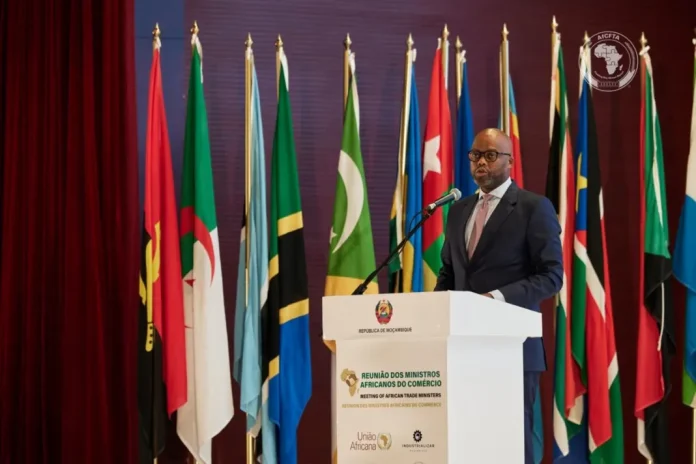
African trade ministers have adopted a unified continental negotiating position ahead of the 14th Ministerial Conference (MC14) of the World Trade Organization (WTO), scheduled to take place in Yaoundé, Cameroon, later this month. The move underscores Africa’s effort to strengthen its collective voice in global trade negotiations.
The position was agreed at a meeting of African trade ministers held in Maputo, Mozambique, which hosted the gathering in its capacity as coordinator of the African Group in Geneva. The meeting concluded with the adoption of the Maputo Ministerial Declaration, providing political guidance to African negotiators on key issues to be addressed at MC14.
Speaking at the meeting, Secretary-General of the African Continental Free Trade Area (AfCFTA), Wamkele Mene, emphasised that the continental free trade initiative complements rather than replaces the multilateral trading system. He said AfCFTA should be viewed as a mechanism for strengthening Africa’s engagement in global trade governance.
The declaration outlines several priority issues for Africa, including WTO reform, agriculture and food security, digital trade, adoption of the Investment Facilitation for Development Agreement, and securing permanent observer status for the African Union at the WTO.
Ministers also emphasised the need to preserve Africa’s policy space for industrialisation and digital transformation, while ensuring coherence between AfCFTA implementation, national development strategies, and outcomes at the WTO. The African Group has consistently cautioned against attempts to integrate plurilateral agreements into the WTO framework without full multilateral approval, arguing that such moves could limit development policy options for African economies.
MC14 will mark only the second time a WTO Ministerial Conference is held on African soil, following the landmark Nairobi Ministerial Conference in 2015. The conference is expected to provide African countries with a strategic opportunity to shape global trade rules and advance the continent’s development priorities within the multilateral trading system.